Container Shipping Melbourne: The Complete Step-by-Step Guide for Australian Businesses

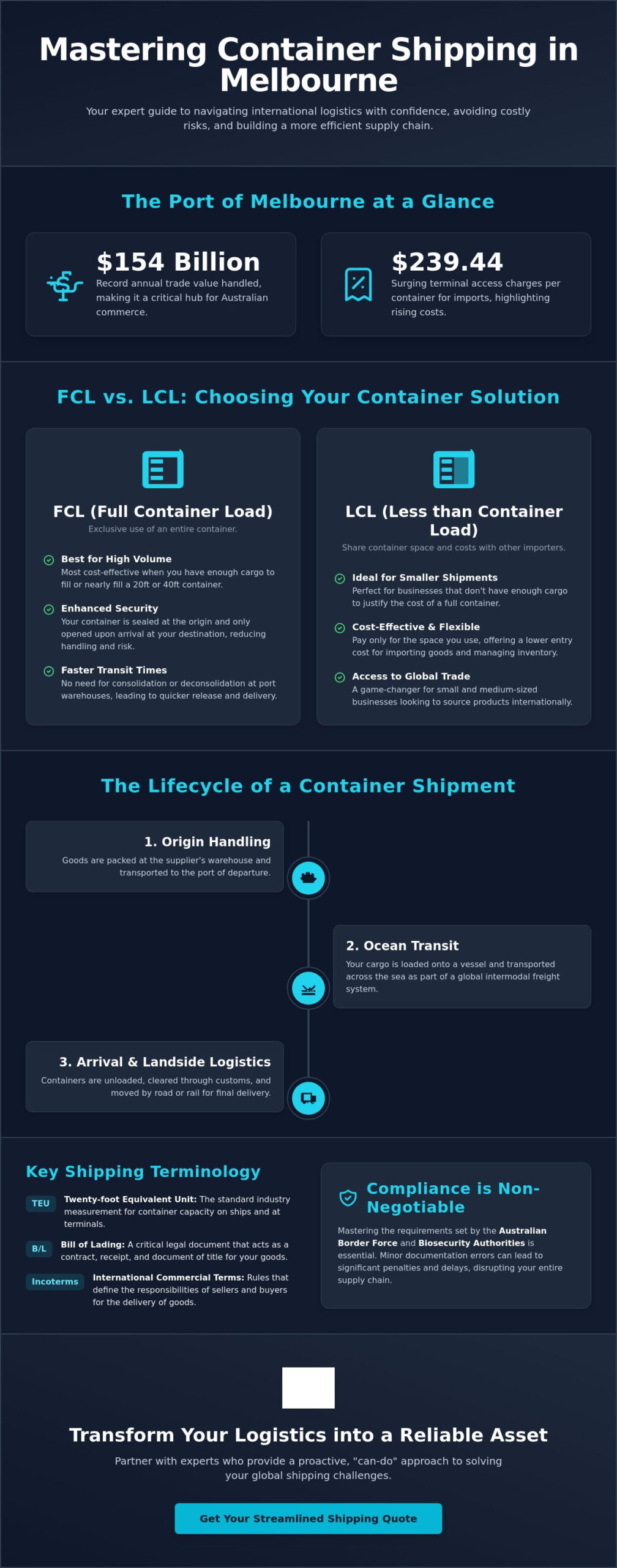
Did you know that the Port of Melbourne handled a record $154 billion in trade last year, even as terminal access charges for imports surged to $239.44 per container in early 2026? It’s a high-stakes environment where a minor documentation error can trigger significant biosecurity penalties or unexpected delays at the wharf. You’ve probably felt the sting of rising port fees or the headache of deciphering complex Incoterms, especially when you’re just trying to get your cargo to its destination. We believe that container shipping melbourne should be a source of growth for your business, not a source of uncertainty.
We’re here to act as your dedicated guide, providing the expert insights you need to move freight with meticulous care. This guide will show you how to master the complexities of international logistics, from choosing between full containers and shared space to clearing customs with absolute confidence. We’ll provide a clear roadmap of the entire shipping journey, offering a strategy that helps you avoid compliance risks and build a more cost-effective supply chain. Let’s transform your logistics into a streamlined, reliable asset for your business today.
Key Takeaways
- Understand why international sea freight is the foundation of Australian commerce and how a professional freight forwarder acts as the architect of your entire logistics chain.
- Learn how to evaluate your cargo volume to choose between Full Container Load (FCL) and Less than Container Load (LCL) solutions for maximum cost-efficiency.
- Navigate the complexities of container shipping melbourne by mastering the non-negotiable compliance requirements set by the Australian Border Force and biosecurity authorities.
- Discover how to streamline your landside logistics to ensure a seamless transition from the Port of Melbourne to your local warehouse for uninterrupted business continuity.
- Gain the confidence to manage global trade by partnering with experts who provide personalized advice and a proactive “can-do” approach to solving logistics challenges.
Navigating the Fundamentals of International Sea Freight in Australia
Australia is an island nation, which makes international sea freight the absolute backbone of our national trade network. While air freight serves a purpose for urgent, high-value items, the heavy lifting of our economy happens on the water. For any business exploring container shipping melbourne, the journey begins with the realization that your cargo is more than just a box; it’s a vital link in your supply chain that requires expert coordination to reach its destination safely. Major Australian port hubs like Melbourne, Sydney, and Brisbane serve as our primary gateways to global markets, connecting local businesses with suppliers across every continent.
Think of a professional freight forwarder as the lead architect of your entire logistics chain. We don’t just book space on a vessel; we design a comprehensive path that takes your goods from a supplier’s factory floor directly to your warehouse. This door-to-door delivery model is the gold standard for modern business, as it removes the confusion of managing multiple transport vendors. By providing a single point of contact, we ensure that every transition is handled with the precision and personal attention your cargo deserves.
To better understand the scale and operation of our local maritime infrastructure, watch this helpful video of the Port of Melbourne:
The Lifecycle of a Container Shipment
Every shipment follows a methodical lifecycle that ensures efficiency and safety. It begins with origin handling, where your goods are carefully packed at the supplier’s warehouse and transported to the departure port. Once the vessel departs, your cargo enters the ocean transit phase. During this time, it’s part of a sophisticated global system of intermodal freight transport that allows goods to move across different modes of transport without being unpacked. Finally, the arrival and landside logistics phase begins. This is the critical moment when containers are unloaded and transitioned from the sea to road or rail for the final leg of their journey.
Key Shipping Terminology Every Importer Should Know
Mastering a few industry terms will help you communicate with confidence during the container shipping melbourne process. You’ll frequently hear the term TEU, which stands for Twenty-foot Equivalent Unit; it’s the standard measure used to describe container capacity. Another essential document is the Bill of Lading, which acts as a contract of carriage and a receipt for your goods. You must also pay close attention to Incoterms, as these international rules define exactly where the seller’s responsibility ends and your liability begins. Because the ocean can be unpredictable, we always recommend securing marine transit insurance to protect your financial investment against unforeseen incidents during transit.
Evaluating FCL vs. LCL: Which Container Solution Fits Your Cargo?
Choosing between Full Container Load (FCL) and Less-than-Container Load (LCL) is one of the most significant strategic decisions you’ll make for your supply chain. Your total shipping volume is the primary factor that determines the most cost-effective method for your business. Navigating the logistical hurdles of container shipping melbourne requires a clear understanding of how these two methods differ in terms of cost, speed, and safety. While FCL gives you exclusive use of a container, LCL allows you to share space with other importers, which can be a game-changer for smaller shipments.
The choice between these methods often reflects the scale of your operations and the nature of your cargo. We align our processes with the standards supported by the peak industry body Shipping Australia to ensure your goods are handled with the highest level of professionalism. FCL is typically the preferred choice for businesses moving large volumes, whereas LCL offers a flexible entry point for those with smaller freight needs. Volume dictates value, and choosing correctly can save your business thousands in unnecessary overheads.
When to Choose Full Container Load (FCL)
FCL is the ideal solution for shipments that exceed 15 cubic metres or for goods that are particularly fragile and require minimal handling. Because your cargo is the only thing in the container, there is no need for consolidation at the port of origin or deconsolidation upon arrival. This lack of extra handling results in faster transit times. FCL offers the highest level of cargo security for high-value Australian imports, as the container remains sealed from the supplier’s door to your warehouse. If you want total control over your shipment’s environment, FCL is the bold choice for your logistics strategy.
When to Choose Less-than-Container Load (LCL)
LCL is perfect for startups and small businesses testing new products in the Australian market. You only pay for the volume you actually use, which significantly reduces the financial barrier to entry for international trade. Consolidated shipping services allow you to reduce overheads by sharing the cost of the container with other businesses. If you’re managing smaller quantities, our LCL Shipping Australia guide provides deeper insights into how this method can benefit your specific cargo profile. Whether you’re a seasoned importer or a newcomer to container shipping melbourne, selecting the right mode ensures your goods arrive on time and within budget. If you’re unsure which path to take, talk to our team about your specific cargo needs for a tailored solution.
A Step-by-Step Guide to Australian Customs and Biosecurity
Australian borders are among the most strictly regulated in the world, which makes compliance a non-negotiable priority for every importer. When your cargo arrives via container shipping melbourne, it falls under the immediate jurisdiction of the Australian Border Force (ABF) and the Department of Agriculture, Fisheries and Forestry (DAFF). The ABF acts as the primary gatekeeper, screening cargo for security risks and ensuring all revenue is correctly collected. It’s a high-pressure stage of the journey where precision is your best friend. We take immense pride in managing these complexities for our clients, ensuring that every shipment meets the rigorous standards required for entry.
A common misconception among businesses is that customs delays are an unavoidable part of international trade. In reality, most holdups at the wharf aren’t caused by the physical cargo itself. They’re almost always the result of poor documentation or clerical errors. This is exactly why professional customs brokerage is an essential risk mitigation tool. We act as your dedicated partner, reviewing every detail before your container even touches the dock to prevent avoidable penalties, storage fees, or biosecurity holds. Our proactive approach ensures your goods move through the terminal with the speed and reliability your business demands.
Essential Documentation for Seamless Clearance
To ensure a smooth transition through the border, you must provide a specific set of documents that tell the story of your cargo. The Commercial Invoice and Packing List are the foundation, detailing the value, origin, and exact contents of your shipment. For biosecurity purposes, DAFF requires a Packing Declaration to confirm that packing materials like timber or straw don’t harbor invasive pests. You should also verify if your goods qualify for a Certificate of Origin. Under various Free Trade Agreements, this single document can significantly reduce or even eliminate import duties, providing a direct boost to your bottom line.
Understanding Duties, Taxes, and GST
Financial planning is critical when navigating container shipping melbourne, as import costs extend beyond simple freight rates. Every item you import is classified under an HS Code, which determines the specific rate of duty applied to your goods. Beyond duty, almost all imported goods are subject to a 10% GST, calculated on the Value of the Taxable Importation. Getting these classifications right is the difference between a profitable shipment and a compliance nightmare. For a deeper dive into tax structures and regulatory requirements, we recommend exploring our Customs Clearance Australia pillar guide. We’re here to solve these problems for you, turning a complex legal process into a streamlined business outcome.
Streamlining Landside Logistics and Final Mile Delivery
Once your cargo clears the rigorous customs and biosecurity hurdles we’ve previously discussed, the focus shifts to the most critical link for your business continuity: the last mile. This final leg of the journey, moving your goods from the wharf to your warehouse, is where efficiency directly impacts your bottom line. When managing container shipping melbourne, the transition from the port to a local facility must be handled with proactive precision to avoid costly storage fees. We treat this stage with the same meticulous care as the ocean transit, ensuring your goods are ready for sale or production without delay.
Reliability in this phase depends on a robust network of road and rail assets. While rail serves as a powerhouse for national distribution over long distances, road transport remains the primary choice for local metropolitan deliveries. A common pain point for many Australian businesses is the lack of clarity regarding port-related costs. We prioritize absolute transparency in local transport charges, providing you with a clear, upfront understanding of terminal access fees and cartage costs. This commitment to honesty helps you build a more predictable and cost-effective logistics strategy. For a comprehensive breakdown of every variable that influences your budget, our guide to shipping container transport cost Australia covers the full spectrum of fees and surcharges you need to account for in 2026.
Wharf Cartage and Container Unpacking
The process begins the moment your container is discharged from the vessel. Efficient wharf cartage requires seamless coordination between the terminal and the transport provider to meet strict “time slot” requirements. We frequently utilize side loaders for our clients, which are specialized trailers that can place a container directly on the ground at your site for easy access. If your facility isn’t equipped to handle a full container, we coordinate with 3PL providers to manage the container destuffing and inventory sorting on your behalf. This integrated approach ensures that your container shipping melbourne experience remains stress-free from the dock to the doorstep.
Warehousing and Distribution Strategies
An integrated warehousing strategy is the secret to reducing supply chain friction and maintaining a competitive edge. 3PL is a scalable solution for businesses lacking their own storage infrastructure, offering the flexibility to expand your inventory without the overhead of a long-term commercial lease. By utilizing secure warehouse storage for high-turnover goods, you can ensure that your products are always within reach of your customers. This level of local connectivity, combined with our global reach, positions your business for sustainable growth. If you are ready to optimize your final mile delivery, contact our team for a tailored transport and warehousing quote today.
Partnering with Freight and More for Seamless Global Logistics
We take immense pride in being a bold overachiever that goes beyond industry norms. This means we’re both globally minded and locally attentive, offering the extensive reach of a major player with the bespoke advice of a boutique consultant. You’re never just a number to us; you’re a valued partner. We’ve built our reputation on being dependable, transparent, and highly motivated to solve the unique challenges that Australian importers face every day. It’s this combination of professional confidence and welcoming enthusiasm that allows us to turn even the most complex logistics puzzles into streamlined successes for our clients.
Why an Integrated Approach Outperforms Fragmented Logistics
When you work with multiple vendors for international sea freight, customs, and transport, you’re often left to bridge the gaps yourself. This fragmented approach is where costly errors and delays usually happen. By choosing an integrated solution, you gain a single point of contact for your entire supply chain. Our team manages every transition, from the moment your goods leave the supplier to the final mile delivery at your warehouse. This oversight is vital for preventing expensive port storage fees, often called demurrage, which can accumulate rapidly if your paperwork isn’t perfect or your transport isn’t synchronized. We take pride in removing these obstacles before they even appear, maintaining a steady and methodical rhythm for your cargo.
Ready to Move Your Cargo?
Starting your next shipment is a straightforward and transparent process designed to give you total confidence. To provide you with a tailored shipping quote, we simply need a few key details about your freight. Please have your cargo dimensions, weight, origin, and final destination ready when you reach out. Whether you’re moving a single pallet or managing a complex fleet of full containers, we’re eager to provide the expert advice and support you need to succeed. Contact the expert team at Freight and More today to discuss your container shipping needs and experience the difference that professional, client-focused logistics can make for your business. We’re ready to help you build a more reliable and cost-effective supply chain today!
Take Command of Your Global Supply Chain
Mastering the complexities of international trade doesn’t have to be a solo journey. By understanding the nuances of FCL and LCL shipping and prioritizing precise customs documentation, you’ve already taken the first steps toward a more resilient business model. We’ve spent years refining our processes to ensure that container shipping melbourne remains a reliable engine for your growth rather than a source of stress.
Founded in 2009, we’ve built a proven track record by combining our expert Australian customs brokerage integration with an expansive global network of agents. This allows us to provide a truly seamless door-to-door delivery experience that protects your bottom line from unnecessary delays and hidden fees. We’re ready to apply our “can-do” attitude to your specific cargo needs, ensuring every shipment is handled with the meticulous care it deserves.
If you’re ready to streamline your logistics and move your cargo with total confidence, our team is standing by to assist. Request a Tailored Container Shipping Quote today and let’s start building a more efficient future for your business together!
Frequently Asked Questions
How much does it cost to ship a container to Australia?
Shipping costs are determined by several variables including the port of origin, the size of the container, and current fuel surcharges. Your final rate will also depend on the weight of your goods and any additional terminal handling charges at the destination port. We provide transparent, all-inclusive quotes that account for these shifting market conditions to help you budget with confidence and precision. For a detailed breakdown of every cost component, our guide to shipping container transport cost Australia in 2026 provides the comprehensive analysis you need to plan your logistics budget effectively.
What is the difference between FCL and LCL shipping?
FCL, or Full Container Load, gives you exclusive use of a 20ft or 40ft container for your cargo. LCL, or Less-than-Container Load, allows you to share space with other importers, which is a cost-effective choice for smaller volumes. While FCL offers faster transit times and higher security, LCL is an excellent entry point for startups testing new products in the Australian market.
How long does container shipping take to reach major Australian ports?
Transit times vary significantly depending on the shipping route and the number of transshipment stops along the way. Direct services from major Asian hubs like Singapore or Shanghai usually reach Melbourne in 15 to 25 days. Shipments originating from Europe or the United States typically require 40 to 55 days. These timelines can be impacted by port congestion or global schedule reliability, which sat at 62.2% in early 2026. Choosing the right container shipping melbourne route is essential for meeting your inventory deadlines. If you source goods from North America, our detailed breakdown of sea freight costs from USA to Australia can help you plan your trans-Pacific logistics budget with greater precision.
Do I need a customs broker for container shipping in Australia?
While it isn’t a legal requirement for individuals, businesses should always use a professional customs broker to ensure compliance with the Australian Border Force. A broker manages the complex classification of goods and ensures all duties and taxes are calculated correctly. This proactive management prevents expensive documentation errors and avoids the risk of severe financial penalties or cargo holds at the wharf.
What are Incoterms and why do they matter for my shipment?
Incoterms are standardized international rules that define the specific responsibilities of buyers and sellers in a trade contract. They determine who is responsible for paying freight costs, insurance, and import duties at every stage of the journey. Understanding these terms is vital because they clarify exactly when the risk of loss or damage transfers from the supplier to your business.
Can I ship personal effects via container freight with Freight and More?
We specialize exclusively in commercial cargo and do not offer shipping services for personal effects or residential household moves. However, for individuals needing assistance with international relocation, Execu-Move provides specialized services to manage the transition of personal belongings across borders. Our operations are designed to support Australian businesses with professional-grade logistics solutions for their trade requirements. If you’re an entrepreneur or corporate entity moving commercial goods, we’re perfectly equipped to manage your container shipping melbourne requirements with meticulous care.
What is biosecurity and why is it so strict in Australia?
Biosecurity refers to the rigorous measures designed to protect Australia’s unique environment and agricultural industries from invasive pests and diseases. These laws are primarily governed by the Biosecurity Act 2015, with the Department of Agriculture, Fisheries and Forestry acting as the primary authority. Strict enforcement involves thorough inspections of packing materials and cargo, as undeclared high-risk items can lead to significant fines or prosecution.
What happens if my cargo is damaged during sea transit?
If your cargo arrives damaged, you must document the condition immediately with photos and notify the carrier in writing. The liability of shipping lines is often limited by international conventions, which may not cover the full value of your goods. We strongly recommend securing marine transit insurance for every shipment to provide comprehensive financial protection against unforeseen incidents on the water.
